
Buying a ring online is much easier when you know your correct size. The problem is that guessing can leave you with a ring that spins around your finger or will not comfortably pass over your knuckle.
Fortunately, learning how to measure ring size at home only takes a few minutes.
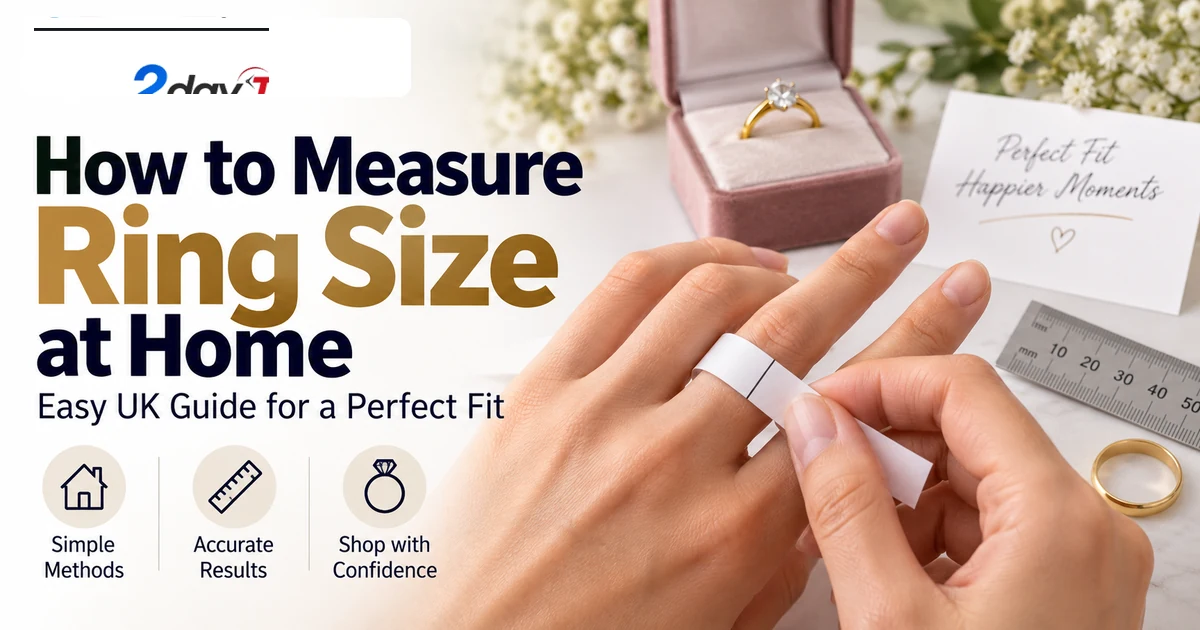
The easiest method is to wrap a narrow strip of non-stretchy paper around the base of the finger, mark where the ends meet, then measure that length in millimetres. If you already own a ring that fits the same finger properly, measuring its internal diameter can be even more reliable. Compare your measurement with the size chart supplied by the jeweller you plan to buy from.
For the best result, measure more than once and avoid measuring when your hands are unusually cold or hot.
How UK Ring Sizes Work
UK ring sizes are normally shown as letters rather than simple numbers.
You may see sizes such as:
K
L
M
N
O
P
Q
R
S
T
Each letter corresponds to a particular ring circumference and inside diameter.
For example, Goldsmiths currently lists a UK size N at approximately 53.8 mm circumference and 17.1 mm internal diameter.
However, it is still sensible to use the sizing chart supplied by the retailer selling the ring. Small differences in design, band width and manufacturer sizing can affect the final fit.
What You Need to Measure Ring Size at Home
You can use items you probably already have.
Prepare:
- A narrow strip of paper
- A fine pen or pencil
- A ruler marked in millimetres
Alternatively, you can use a ring that already fits the intended finger.
A printable ring sizer from a reputable jeweller can also be useful, but make sure it is printed at the correct scale. Incorrect printer settings can make an otherwise accurate chart useless.
Method 1: Measure Your Finger With Paper
This is one of the easiest methods when you do not already own a suitable ring.
Step 1: Cut a Narrow Paper Strip
Cut a strip of ordinary paper that is long enough to wrap comfortably around your finger.
The paper should be flexible but should not stretch.
Paper is often easier to control than elastic string because it keeps its original length.
Step 2: Wrap It Around the Correct Finger
Wrap the paper around the base of the exact finger where you plan to wear the ring.
It should feel snug, but it should not dig into the skin.
Remember that the ring must also pass over your knuckle.
If your knuckle is noticeably wider than the base of your finger, take that into account before choosing a final size.
Step 3: Mark the Overlap
Use a fine pen or pencil to mark exactly where the end of the paper meets the rest of the strip.
Try to make a precise mark rather than a thick line.
Even a small measurement difference can affect which ring size you choose.
Step 4: Measure in Millimetres
Take the strip off your finger and lay it flat.
Measure from the beginning of the strip to your mark using the millimetre side of the ruler.
This gives you the approximate circumference of your finger.
Step 5: Check the Retailer’s Size Chart
Compare the measurement with the UK ring size chart provided by the jeweller.
For a reliable reference, the Goldsmiths ring size guide explains both circumference and internal diameter methods.
Do not convert your measurement using several unrelated charts and then average the results. Use the chart associated with the ring you intend to purchase where possible.
Method 2: Measure a Ring That Already Fits
If you have a ring that fits the correct finger comfortably, this can be one of the most useful home methods.
Place the ring flat on a ruler.
Measure straight across the widest point of the inside opening.
Do not include the thickness of the metal band.
Record the internal diameter in millimetres.
Then match that measurement to the jeweller’s ring size chart.
For example, if the inside diameter is around 17 mm, it may correspond roughly to a UK size around N depending on the retailer’s chart.
The important detail is that the existing ring should fit the same finger where the new ring will be worn.
A ring that fits your middle finger is not necessarily a reliable measurement for your ring finger.
When Is the Best Time to Measure Ring Size?
Finger size is not completely fixed throughout the day.
Temperature and normal daily activity can temporarily change how your fingers feel.
Major UK jewellers including Goldsmiths and Beaverbrooks advise measuring later in the day, when fingers tend to be larger.
Avoid measuring immediately after your hands have been exposed to very cold conditions.
Cold fingers can become temporarily smaller, which could cause you to choose a ring that later feels too tight.
The simplest approach is to measure under comfortable, normal indoor conditions.
Measure More Than Once
Do not depend on a single reading.
Measure the same finger at least two or three times.
If you repeatedly get the same measurement, you can be more confident that your result is useful.
If the measurements vary significantly, check your method.
You may be:
- Wrapping the paper too tightly
- Leaving it too loose
- Using stretchy material
- Measuring at different points on the finger
- Making an unclear mark
Repeat the process carefully until the readings become consistent.
What if Your Knuckle Is Wider?
Some people have a noticeably wider knuckle than the base of their finger.
In that situation, a ring sized only for the base may fit beautifully once it is on but be difficult to get over the knuckle.
Measure both areas.
The final ring needs to pass over the knuckle with some resistance while still sitting securely at the base.
If there is a large difference between the two measurements, professional sizing from a jeweller is much safer than guessing.
Does Ring Band Width Affect Size?
Yes, it can.
A wider band covers more of the finger and can feel tighter than a narrow ring in the same nominal size.
Goldsmiths and Beaverbrooks both advise that thicker or wider bands may require a larger size.
This matters particularly when buying:
- Wide wedding bands
- Chunky fashion rings
- Statement rings
- Multiple rings worn together
If you are choosing a wide design, check the retailer’s individual fitting advice before ordering.
How Should a Ring Fit?
A correctly fitting ring should feel secure without being uncomfortable.
It should:
- Slide over the knuckle with slight resistance
- Sit comfortably at the base of the finger
- Avoid spinning excessively
- Not leave the finger painfully compressed
- Be removable without excessive force
A ring should not feel so loose that it could easily fall off when you move your hand.
It should also not be so tight that the finger feels uncomfortable.
How to Measure Someone’s Ring Size Secretly
Buying a ring as a surprise makes sizing more difficult.
One of the safest approaches is to borrow a ring that the person already wears on the intended finger.
Measure the internal diameter or take the ring to a jeweller for professional sizing.
Make sure the borrowed ring actually comes from the correct finger.
Another option is to ask a close family member or friend whether they already know the person’s size.
Avoid relying on guesses based on height, hand size or appearance. These are not reliable ways to choose a ring.
Should You Use String?
String is commonly suggested for measuring ring size, but it can introduce extra error.
Some string stretches slightly. It can also tighten around the finger more easily than paper.
If you use string, choose material that does not stretch and avoid pulling it tight.
A narrow paper strip is often easier for a home measurement because it remains more stable.
Can You Measure Ring Size With a Tape Measure?
A flexible sewing tape marked in millimetres can work.
Wrap it gently around the base of the finger and read the circumference.
Do not try to wrap a rigid metal DIY tape measure around your finger.
Whatever method you choose, repeat your measurement before ordering an expensive ring.
Should You Size Up if You Are Between Sizes?
This depends on the ring.
For a normal band, choosing the slightly larger option can sometimes be more comfortable when you fall directly between two sizes.
However, ring style matters.
A wide band may require different sizing from a narrow band, while certain designs can be easier or harder to resize later.
For expensive rings, engagement rings or wedding bands, ask the jeweller for advice instead of automatically choosing a larger size.
Home Measurement vs Professional Ring Sizing
Home measurement is useful for:
- Fashion rings
- Early product research
- Online shopping
- Estimating someone’s size
- Narrowing down possible sizes
Professional measurement is still the safest choice when accuracy really matters.
A jeweller can use dedicated sizing tools and can also consider the ring’s width, design and how it sits on your finger.
For an expensive engagement or wedding ring, spending a few minutes getting professionally measured can prevent a costly sizing mistake.
Common Ring Sizing Mistakes
Measuring the Wrong Finger
Measure the exact finger where the ring will be worn.
Measuring Only Once
Repeat the measurement to confirm it.
Pulling the Paper Too Tight
It should be snug, not restrictive.
Measuring Cold Hands
Cold fingers may temporarily measure smaller.
Forgetting About the Knuckle
The ring still needs to pass comfortably over it.
Ignoring Band Width
Wide rings often feel tighter than narrow rings.
Assuming Every Country Uses the Same Sizes
UK, US and European ring sizing systems use different labels.
When buying internationally, use the seller’s own conversion guide.
More Fashion and Sizing Guides
If you regularly shop for clothing, footwear or accessories online, accurate measurements can save a lot of unnecessary returns.
You can explore more guides in the 2DayTimes Fashion section.
For footwear care, you may also find our guide on how to clean white trainers useful.
You can browse the latest practical guides on the 2DayTimes homepage.
Frequently Asked Questions
What is the easiest way to measure ring size at home?
Wrap a narrow strip of paper snugly around the base of the intended finger, mark where it overlaps, measure that length in millimetres and compare the result with the jeweller’s UK sizing chart.
Is it better to measure a finger or an existing ring?
An existing ring that already fits the correct finger can provide a very useful measurement. Measure its internal diameter in millimetres and compare that measurement with the retailer’s chart.
Should I measure ring size in the morning or evening?
Later in the day is generally preferable because fingers can be slightly larger after normal daily activity. Avoid measuring when your hands are unusually cold.
How many times should I measure my finger?
Measure at least two or three times. Consistent readings reduce the chance of choosing a size based on one inaccurate measurement.
What if my measurement falls between two ring sizes?
Check the retailer’s recommendations. The correct choice can depend on the ring’s width and design. Wider rings often feel tighter.
Are UK ring sizes the same as US sizes?
No. The UK commonly uses letters, while the US generally uses numbers. Use the retailer’s conversion chart when buying from an international seller.
How accurate is measuring ring size at home?
It can provide a useful estimate when done carefully, particularly if you repeat the measurement. Professional sizing by a jeweller remains the most reliable option for expensive or important rings.
Final Thoughts
Learning how to measure ring size at home can help you shop online with much more confidence.
For a simple measurement, wrap a narrow paper strip around the correct finger, mark the overlap and measure the circumference in millimetres. If you already own a well-fitting ring for that finger, measuring its internal diameter can be even easier.
Measure several times, consider the knuckle and avoid measuring when your hands are unusually cold.
Most importantly, use the sizing chart supplied by the jeweller selling the ring.
For everyday fashion jewellery, a careful home measurement may be enough. For an engagement ring, wedding band or another expensive purchase, professional sizing is still the safest final check.