

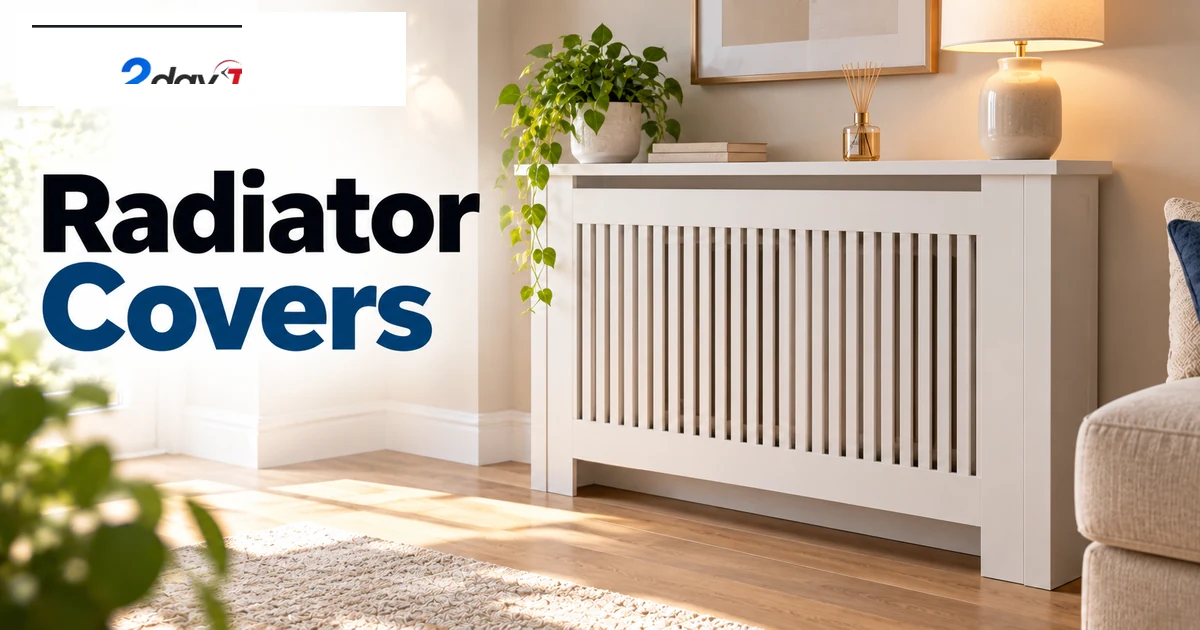
Radiator covers can hide an unattractive radiator, create a neater finish and provide a useful barrier between a hot surface and the room. But choosing one purely because it looks good can create another problem: restricted airflow and poorer heating performance.
A good radiator cover should be large enough to clear the radiator, valves and pipework, provide plenty of open ventilation at the front and top, remain securely positioned, and still allow access for heating controls and maintenance.
The most important question is not simply whether a cover fits over your radiator. It is whether the radiator can still move heat into the room effectively once the cover is installed.
Are Radiator Covers a Good Idea?
They can be, depending on why you want one.
Radiator covers are particularly useful when you want to improve the appearance of an older panel radiator, reduce direct access to a hot surface, or make a radiator blend better with fitted furniture.
They are less attractive when maximum heating efficiency is your priority.
Any enclosure changes the way air moves around a radiator. A well ventilated design can limit this effect, while a tightly enclosed radiator with a mostly solid front or top can restrict warm air leaving the unit.
This means the best radiator cover is a compromise between appearance, access and airflow.
Do Radiator Covers Block Heat?
This is the question that matters most.
Radiators heat a room partly through radiation and largely through convection. Cooler air moves around the lower part of the radiator, becomes warmer and rises.
Put a cabinet around the radiator and that airflow now has to pass through the cover.
A cover with a large open grille, space underneath and ventilation at the top gives warm air a route back into the room.
A poorly ventilated cover can trap more heat around the radiator.
There is another important issue that many buying guides overlook: thermostatic radiator valves.
The Energy Saving Trust guidance on heating controls says radiator covers are not recommended where they prevent a thermostatic radiator valve from getting an accurate room temperature reading.
If your TRV sits inside a warm enclosure, it may respond to the temperature around the radiator rather than the temperature of the room.
Before buying a cover, therefore, check where your valve is located and whether it will remain exposed to normal room air.
When a Radiator Cover Makes Most Sense
A cover can be particularly useful in a hallway, living room, bedroom or other visible area where an older radiator disrupts the appearance of the room.
It can also provide a barrier that reduces easy contact with the hot metal surface.
That does not mean the cover itself can never become warm.
In homes with young children or vulnerable people, choose a stable design with secure wall fixings and avoid treating a lightweight freestanding cabinet as a guaranteed safety device.
The cover should not wobble, tip forward or become something that a child can easily pull over.
How to Measure for a Radiator Cover
Do not measure only the metal panel.
You need to account for everything that the cover must fit around.
Measure the overall width from the furthest point on one side to the furthest point on the other, including projecting valves where applicable.
Then measure from the floor to the highest point of the radiator.
Finally, measure from the wall to the furthest forward point.
Also note:
Radiator valves
Pipework
Skirting boards
Window sills
Electrical sockets
Nearby furniture
The position of the TRV
Suppose the radiator itself is 100 cm wide but a valve extends several centimetres beyond one side.
A cover based only on the 100 cm panel width may not fit at all.
Use your full measurements when checking the manufacturer’s internal dimensions, not only the advertised external size of the cover.
You must then add whatever ventilation and fitting clearance the particular manufacturer requires.
There is no sensible universal clearance figure for every radiator cover because designs differ.
Internal Size vs External Size
This is another common buying mistake.
A radiator cover advertised as 120 cm wide may refer to its outside dimensions.
The space available inside could be significantly narrower because of the side panels.
Always check both.
This matters particularly in narrow hallways where you need enough internal room for the radiator but do not want the cabinet projecting unnecessarily into the walking area.
Which Radiator Cover Material Is Best?
MDF is one of the most common materials for UK radiator covers.
It is relatively affordable, easy to paint and available in a wide range of traditional and modern designs.
Wooden covers can offer a more natural or premium appearance, particularly in period interiors.
Metal designs are also available and may provide a slimmer visual profile depending on the style.
Material alone does not determine heating performance.
The amount of open ventilation and the space around the radiator are more important than whether the cabinet is made from MDF, timber or metal.
Look at the Grille Before the Colour
It is easy to choose a radiator cover by looking at the finish first.
The front design deserves more attention.
A decorative panel with very small openings may look elegant but provide less free airflow than a more open slatted design.
Look for:
A generously vented front
Openings near the top
Space for air to enter underneath
A design that does not sit tightly against the radiator
If heating performance matters more than hiding the radiator completely, choose the more open design.
Should the Top of a Radiator Cover Be Solid?
Many covers have a shelf-like top.
This can be useful for small decorative objects, but the design still needs a way for warm air to escape.
If the top is completely solid and the front is restrictive, heat can accumulate inside the cabinet.
Look for a cover with suitable upper ventilation or a design that allows rising warm air to move back into the room.
Also be sensible about what you place on top.
Avoid items that could be damaged by prolonged warmth, and do not block ventilation openings with books, storage boxes or decorations.
Adjustable vs Made-to-Measure Radiator Covers
Adjustable Covers
These are useful when your radiator is a common size and you want a relatively affordable option.
They can also be helpful when you are unsure whether a rigid standard size will fit exactly.
The trade-off is appearance. Extending sections and joins may be more noticeable.
Made-to-Measure Covers
These make more sense where the radiator sits:
Under a low window sill
Between two walls
Inside an alcove
Beside awkward pipework
Against unusual skirting
In a prominent room where appearance matters
A custom cover costs more, but it can avoid the bulky look that sometimes comes from buying the next standard size up simply because the smaller one does not fit.
Radiator Covers and Curtains
Radiators are commonly installed underneath windows, which means the cover may also affect your curtain choices.
Long curtains hanging directly over a radiator or cover can interrupt warm air moving into the room.
If you are planning both at the same time, measure the entire setup rather than treating them as separate projects.
Our guide on measuring curtains correctly around windows and radiators explains how radiator position can affect curtain length.
This is particularly worth considering before ordering floor length curtains.
Radiator Cover or New Radiator?
Sometimes a cover solves the wrong problem.
If the radiator is simply unattractive but otherwise working well, a cover can be a quick visual improvement.
But if the radiator:
Does not heat the room adequately
Has serious corrosion
Leaks
Requires frequent bleeding
Is badly positioned
Is far larger or smaller than the room requires
then hiding it may not be the best investment.
You might get more value from fixing, replacing or repositioning the radiator instead.
A cover should improve the room, not conceal a heating problem.
Can You Put a Radiator Cover in a Small Room?
Yes, but think carefully about depth.
Radiator cabinets project farther into the room than the radiator itself.
In a narrow hallway, small bedroom or compact living room, several extra centimetres can make a noticeable difference.
Use masking tape on the floor to mark the proposed external dimensions of the cover before buying.
Walk past the outline for a day.
This simple test tells you much more about how intrusive the cover will feel than looking at product photographs online.
How to Keep a Covered Radiator Working Well
Dust can collect in the grille and around the radiator.
Over time, this can restrict airflow.
Vacuum the openings regularly and remove accessible dust from behind the cover.
Make sure the cover can still be removed or opened when you need to:
Bleed the radiator
Reach the valves
Clean behind it
Check for leaks
Service the heating system
A beautiful cover that makes routine radiator maintenance difficult is poorly designed.
Radiator Covers and Home Heating Efficiency
If your main goal is reducing heating costs, a decorative radiator cover should not be treated as an energy-saving product.
In fact, maximising free airflow around a radiator is generally better for heat distribution.
If the radiator is mounted on an external wall, purpose-made reflective radiator panels behind it may be a more directly energy-focused improvement.
The Energy Saving Trust says radiator reflector panels can reduce heat lost into external walls, particularly where those walls are uninsulated.
The broader principle is simple: avoid trapping heat where it cannot effectively warm the room.
If you are also dealing with cold surfaces and winter moisture, our wider Lifestyle guides include practical advice for improving everyday comfort around the home.
Common Mistakes to Avoid
The biggest mistake is buying by external width alone.
Another is choosing a nearly solid decorative grille that leaves too little space for air movement.
Do not hide a thermostatic valve inside a warm enclosure without considering how it will sense room temperature.
Do not push furniture directly against the front of the cover.
Do not block the top ventilation with storage.
Do not leave an unstable cover unsecured in a home where children may climb, pull or lean against it.
And do not order until you have measured valves, pipes, skirting and the full depth of the radiator.
Frequently Asked Questions
Do radiator covers make a room colder?
They can reduce effective heat distribution if the cover restricts airflow. A well ventilated design should minimise the impact, but leaving a radiator completely unobstructed generally gives heat the clearest route into the room.
Are radiator covers safe for children?
A secure cover can reduce direct access to a hot radiator, but it needs to be stable and properly fixed. The cover itself may still become warm.
Can a radiator cover affect a TRV?
Yes. A cover can create a warmer pocket of air around a thermostatic radiator valve, which can interfere with its temperature reading. Keeping the TRV exposed to normal room air is preferable.
How do I know what size radiator cover to buy?
Measure the complete radiator installation, including width, height, depth, valves and pipework. Then compare those figures with the manufacturer’s internal dimensions and clearance requirements.
Are MDF radiator covers good?
MDF covers are popular because they are affordable, smooth and easy to paint. Ventilation and fit matter more for heating performance than the material alone.
Can you put things on top of a radiator cover?
Some covers are designed with a shelf top, but do not block ventilation and avoid putting heat-sensitive items directly above the radiator.
Do radiator covers need to be fixed to the wall?
Follow the manufacturer’s installation instructions. Wall fixing is particularly important where stability and child safety are concerns.
Final Thoughts
Radiator covers can make an older radiator look much more considered, while also providing a useful physical barrier and extra surface space.
But design should never come before airflow.
Measure the complete radiator, including its controls and pipework. Check the internal dimensions rather than relying on the advertised outside width, and choose a cover with generous ventilation around the front, top and bottom.
Pay particular attention to thermostatic radiator valves. If the cover isolates the valve from normal room air, heating control can become less accurate.
For some rooms, a radiator cover is a worthwhile finishing touch.
For others, leaving the radiator open, improving the radiator itself or using a reflector panel may be the more practical choice.
The best decision is the one that improves the appearance of the room without making the heating system work harder than necessary.
For more practical UK home guides, visit 2DayTimes.